A kitchen island isn’t just a workspace, it’s the hardest-working surface in the room and often the first thing guests notice. Between meal prep, assignments sprawl, and impromptu coffee dates, it sees constant use. That’s exactly why decorating it right matters. Done well, island styling adds personality without getting in the way of cooking, eating, or cleaning. Done poorly, it creates clutter that ends up shoved aside every time someone needs elbow room. The goal is simple: make the island look intentional and feel functional at the same time.
Table of Contents
ToggleKey Takeaways
- Kitchen island decorating ideas work best when they balance style with function—keep at least 50% of the surface clear for actual use while using trays, bowls, and strategic groupings to create intentional visual zones.
- Layered styling with varying heights creates visual interest: combine low bowls, medium candles or plants, and taller cutting boards or vases to avoid flat or cluttered arrangements.
- Fresh elements like potted herbs, seasonal fruit displays, and high-quality greenery refresh an island year-round without requiring complete overhauls—small swaps like citrus in summer and evergreens in winter maintain cohesion.
- One statement piece—such as a cutting board, large ceramic vessel, or cookbook stack—anchors the island design and makes styling decisions easier than clustering multiple small items.
- Avoid common mistakes like overcrowding, ignoring scale, choosing fragile pieces over durable materials, and neglecting the back side of the island, especially in open-concept homes where it’s visible from multiple angles.
Why Your Kitchen Island Deserves Thoughtful Styling
Most islands default to catch-all status, keys, mail, water bottles, yesterday’s paperwork. Without a clear decorating plan, they become visual noise instead of a design anchor.
Thoughtful styling establishes zones. A small vase or bowl signals “this spot stays clear.” A tray corrals everyday items so they look composed rather than scattered. It’s not about perfection: it’s about creating a visual boundary that reminds everyone (including whoever’s unloading groceries) that the island is more than a dumping ground.
The island also bridges the kitchen and adjacent spaces, dining rooms, living areas, entryways. In open-concept homes, it’s one of the few surfaces visible from multiple angles, which means its styling carries weight across the entire first floor. A well-decorated island ties the room together and makes the kitchen feel finished, even if the backsplash is builder-grade or the cabinets are waiting for a refresh.
Functional Decor: Balancing Beauty with Everyday Use
Decorative items that can’t handle daily life won’t last a week on an island. Prioritize pieces that tolerate spills, bumps, and frequent relocation. Think ceramic bowls, wooden trays, metal canisters, and sturdy vases, not fragile glass sculptures or anything that tips over when someone reaches for the salt.
Keep the center of the island mostly clear if it doubles as a dining surface or primary prep zone. Decorative elements work best at the ends or along the back edge, where they’re visible but out of the work triangle. A strategic decorating approach ensures style doesn’t compromise function.
Consider the island’s size. A 36-inch-wide island has room for one or two small items max. A 60-inch or longer island can handle a tray grouping on one end and a potted herb or cutting board display on the other. Overcrowding makes the space feel smaller and more chaotic.
Layered Styling with Trays and Bowls
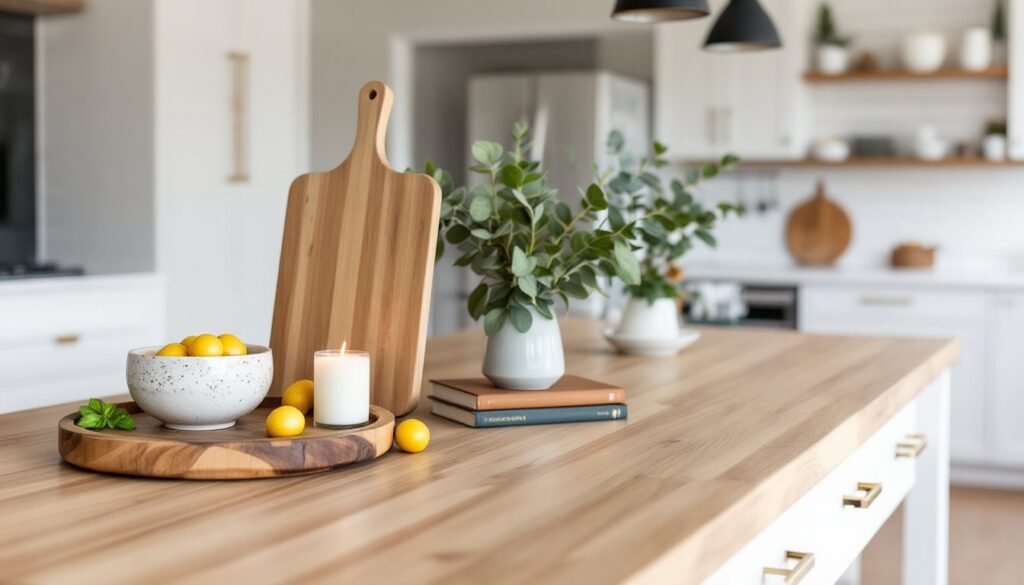
Trays act as visual boundaries and make restyling fast. A 12×16-inch wooden tray can hold a small vase, a candle, and a stack of coasters without looking cluttered. Swap the vase for a bowl of lemons in summer or a small pumpkin in fall, and the whole look shifts in under a minute.
Low-profile bowls, around 8 to 10 inches in diameter, work well for corralling everyday items like fruit, napkins, or keys. Ceramic and wood age better than woven baskets, which collect crumbs and stains. Stackable bowls add dimension without taking up much real estate.
Layering heights creates visual interest. A tall bottle or candlestick next to a shorter bowl draws the eye without blocking sightlines. Keep the tallest element under 12 inches so it doesn’t interfere with pendant lights or feel top-heavy.
Seasonal and Fresh Elements for Year-Round Appeal
Seasonal decor keeps an island from feeling stale, but it doesn’t require a full overhaul every few months. Small swaps, like switching from eucalyptus stems to cherry blossoms, or swapping white candles for amber ones, refresh the space without demanding new containers or color schemes.
Fresh greenery is the easiest way to make an island feel alive. A potted basil plant or rosemary sprig does double duty: it looks good and it’s within arm’s reach when cooking. Faux stems work if natural light is limited, but skip anything dusty or obviously plastic. High-quality faux eucalyptus, olive branches, and dried grasses hold up better than fake tulips or roses.
Fruit bowls are classic for a reason, they add color, texture, and shape while serving a purpose. Lemons, limes, and green apples stay fresh longer than soft berries. A wooden or ceramic bowl keeps them contained and prevents the “random produce pile” look. Seasonal displays also align with decorating trends for 2026, which favor organic materials and earthy palettes.
Seasonal rotation ideas:
- Spring: Small potted herbs, pastel-colored bowls, light linens
- Summer: Citrus, white ceramics, fresh-cut flowers from the yard
- Fall: Mini pumpkins, brass candlesticks, deeper neutrals
- Winter: Evergreen clippings, pillar candles, stone or concrete containers
Keep changes subtle. The goal is cohesion, not a themed transformation every eight weeks.
Statement Pieces That Anchor Your Island Design
One larger item often works better than a crowd of small ones. A statement piece gives the eye somewhere to land and makes styling decisions easier, everything else plays a supporting role.
Cutting boards propped against the backsplash or wall add height and warmth. Look for thick, solid wood boards, walnut, maple, or cherry, that can lean without tipping. A 14×20-inch board is large enough to make an impact without overwhelming a standard island.
Large ceramic or stoneware vessels, vases, crocks, or wide bowls, anchor a corner or end of the island. Choose neutral tones (white, charcoal, natural clay) that won’t clash with changing accessories. A single bold decorating statement can elevate the entire space.
Cookbooks stacked in twos or threes bring color and personality. Arrange them flat rather than upright, and top the stack with a small plant or candle. Choose books with spines or covers that complement the kitchen’s palette, earthy greens, soft blues, warm terracottas.
Sculptural objects, a wooden dough bowl, a vintage scale, a hand-thrown pitcher, add character without feeling overly decorative. These pieces often have history or texture that makes them feel collected rather than bought to match. If it looks like something a cook would actually use (even if it’s decorative now), it probably fits.
Lighting and Accessories That Elevate the Look
Pendant lights aren’t technically decor, but they set the tone for everything on the island. If the island doesn’t have dedicated lighting yet, it’s worth the wiring work, task lighting makes prep safer and more comfortable, and it highlights whatever’s styled below.
Install two to three pendants over islands longer than 60 inches, spaced 24 to 30 inches apart and hung 30 to 36 inches above the countertop. That height keeps lights out of sightlines but low enough to cast usable light. Pendant fixtures in metal, glass, or natural materials like rattan or linen complement most island decor styles without competing.
Candles add warmth and softness, especially in kitchens with a lot of hard surfaces, stone, tile, stainless steel. Pillar candles in 3- to 4-inch diameters stay stable and burn longer than tapers. Battery-operated LED candles work if open flame isn’t practical (kids, pets, or forgetful household members).
Textile accents soften the look. A linen table runner down the center of the island, a small cotton dish towel draped over the edge of a tray, or cloth napkins tucked into a bowl add texture without bulk. Stick to neutrals or muted tones, bold patterns compete with everything else in the room.
Avoid:
- Overhead clutter (hanging baskets, pot racks) that blocks light and makes the island feel cramped
- Too many reflective surfaces (mirrored trays, metallic bowls) that create visual noise
- Anything battery-powered that requires frequent charging or looks cheap up close
Common Mistakes to Avoid When Decorating Your Island
Overcrowding the surface. If there’s no room to set down a cutting board or serving platter without moving three things first, it’s too much. Leave at least 50% of the island surface clear for actual use.
Ignoring scale. Tiny objects get lost on a large island: oversized pieces overwhelm a small one. Match the size of decor to the island’s footprint. A 48-inch island needs smaller, tighter groupings than a 72-inch one.
Choosing form over function. Woven baskets look great in photos but collect grease and grime in a working kitchen. Delicate ceramics chip. Tall vases tip. Pick materials that can handle the reality of the space, as emphasized by resources like The Kitchn, which focuses on practical kitchen design.
Skipping the edit. Islands collect stuff, mail, school forms, water bottles, charging cables. Build in a weekly reset where everything gets cleared off and only intentional decor goes back. It’s easier to maintain a styled island than to start from scratch every time company’s coming.
Using mismatched heights. A flat arrangement feels static: too many tall items feel cluttered. Aim for two to three height levels in any grouping, low bowl, medium candle or plant, taller cutting board or vase.
Neglecting the back side. If the island is visible from the living room or entryway, the back matters as much as the front. Don’t stack clutter on the “hidden” side and assume no one will notice. For more guidance on spatial planning, consider how each angle of the island reads from different rooms.
Forgetting about kids and pets. If the household includes toddlers, dogs, or cats, fragile or tippy decor won’t survive. Weighted bowls, sturdy ceramics, and low-profile arrangements work better than tall vases or candles that can be knocked over. Plenty of design inspiration accounts for real-life durability.
Ignoring the island’s primary function. A baking-focused island needs space for rolling dough and setting sheet pans. A assignments station needs room for laptops and papers. Functional decorating techniques prioritize how the space is actually used, not just how it photographs.