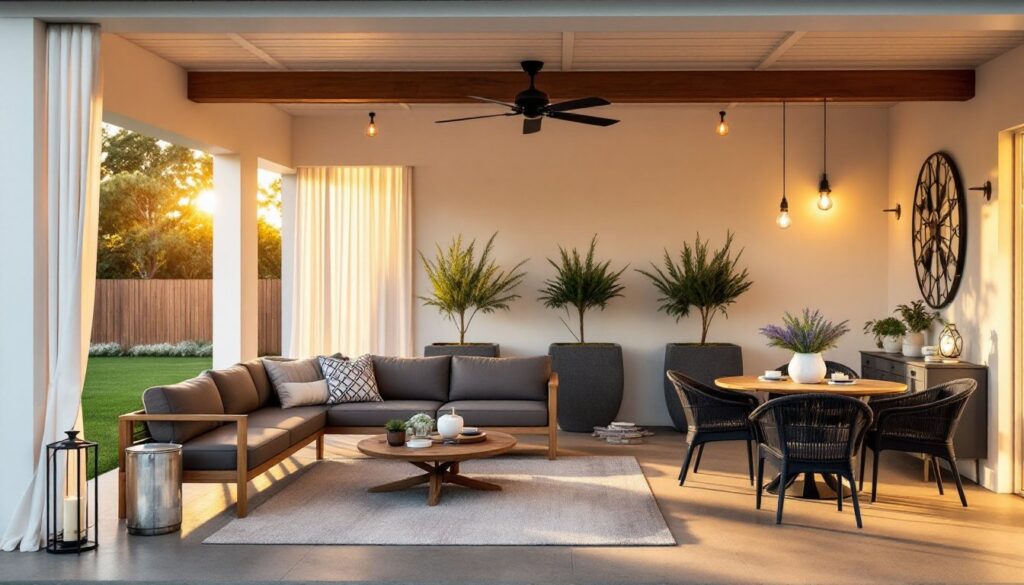
A covered patio offers shelter from the elements without sacrificing open-air living, but too often, these spaces end up as dumping grounds for mismatched furniture and forgotten planters. With the right decor, a covered patio becomes an extension of the home: a functional area for dining, relaxing, or hosting that looks intentional year-round. The key is choosing materials that handle temperature swings and humidity, then layering in style through furniture, lighting, textiles, and greenery. These ideas focus on practical upgrades that hold up to real use.
Table of Contents
ToggleKey Takeaways
- Choose durable furniture like powder-coated aluminum, teak, or resin wicker for covered patio decor that resists rust, weathering, and moisture while maintaining style.
- Layer outdoor rugs, textiles, and throw pillows using solution-dyed acrylic fabrics to define zones and add warmth without permanent commitment.
- Install multiple light sources at varying heights—ceiling fans, string lights, and LED strips—controlled by dimmers or smart plugs to extend usability into the evening.
- Select plants based on light exposure (full sun, partial shade, or deep shade) and arrange them in odd numbers at varying heights using planters, stands, and wall mounts.
- Define separate zones for dining, lounging, and entertaining to make the space feel intentional and functional while adding decorative accents that reflect personal style.
- Rotate seasonal pillows, plants, and decor throughout the year to keep your covered patio feeling fresh without requiring a complete redesign.
Choose Durable Furniture That Balances Style and Function
Furniture anchors the entire patio, so it needs to handle both weather exposure and daily use. Even under a roof, covered patios experience temperature shifts, humidity, and occasional rain blow-in.
Materials that last: Powder-coated aluminum resists rust and stays lightweight for rearranging. Teak and eucalyptus offer natural durability with minimal upkeep, just expect them to weather to a silver-gray patina unless sealed annually. Resin wicker (polyethylene or polypropylene) mimics the look of natural wicker but won’t crack or mold. Avoid untreated wood or wrought iron unless the homeowner commits to regular sealing or rust prevention.
Seating layout: Start with a primary seating area, sectional, loveseat, or a pair of chairs with a side table. Modular sectionals work well because pieces can be reconfigured as needs change. Add ottomans or poufs for flexible extra seating that doubles as footrests or low tables.
Cushions and covers: Use outdoor-grade foam (density of at least 1.8 lb/ft³) wrapped in solution-dyed acrylic fabric (like Sunbrella). This fabric resists fading, mildew, and moisture better than standard polyester. Store cushions during extended rain or invest in waterproof storage bins. Some homeowners prefer quick-dry foam, which sheds water faster after unexpected downpours.
Layer Outdoor Rugs and Textiles for Warmth and Color
Outdoor rugs define zones, soften hard surfaces, and introduce pattern without permanent commitment. They also protect underlying concrete or decking from furniture wear.
Rug materials: Polypropylene rugs are budget-friendly, dry quickly, and resist mold. They’re ideal for high-traffic areas but can feel stiff underfoot. Natural fiber rugs (jute, sisal) add texture but only work in fully covered patios with minimal moisture exposure, they mold easily when damp. For a middle ground, look for PET (recycled polyester) rugs, which offer softness and durability.
Sizing: A rug should fit under the front legs of seating furniture or extend fully beneath a dining set with at least 24 inches of clearance beyond chair backs when pulled out. An 8×10 rug typically suits a four- to six-person dining table: a 9×12 works for larger sectionals.
Layering textiles: Add throw pillows in varying sizes, 18×18-inch and 20×20-inch squares mix well with a couple of lumbar pillows (12×20 inches). Stick to three or four coordinating patterns: one large-scale print, one geometric, one solid, and maybe a stripe. Outdoor curtains (solution-dyed acrylic or polyester) mounted on a tension rod or ceiling track provide privacy, block low sun, and frame the space. Choose panels with weighted hems or grommets to prevent flapping in the breeze. Many decorating ideas tips emphasize layering textures to create cohesion across indoor and outdoor spaces.
Create Ambiance with Strategic Lighting Options
Good lighting extends patio usability into the evening and sets the mood. Layer multiple light sources at different heights rather than relying on a single overhead fixture.
Overhead options: Ceiling fans with integrated lights provide airflow and illumination in one unit, look for damp-rated or wet-rated models (depending on exposure level). Pendant lights or a chandelier add visual interest: mount them at least 7 feet above the floor to prevent head bumps. For wiring, run UF-B (underground feeder) cable in conduit if the patio lacks existing electrical boxes. This may require a permit and should follow NEC Article 225 for outdoor branch circuits. If running new wiring isn’t feasible, plug-in pendant kits work for patios with nearby outlets.
Ambient and task lighting: String lights (Edison bulbs or globe lights) are popular for good reason, they create a soft glow without harsh shadows. Hang them in a zigzag or perimeter pattern, spacing bulbs 18 to 24 inches apart. Use outdoor-rated extension cords (minimum 14-gauge for runs over 25 feet) and connect to a GFCI-protected outlet. Solar-powered lanterns or battery-operated LED candles offer low-commitment mood lighting on tables or shelves. For task lighting near a grill or bar cart, mount LED strip lights under a countertop or railing.
Dimmers and controls: Install a dimmer switch (compatible with LED bulbs) for overhead lights, or use smart plugs to control string lights remotely. This allows the homeowner to adjust brightness depending on whether they’re hosting a dinner party or reading alone.
Add Greenery and Planters to Bring Life to Your Patio
Plants soften hard edges, improve air quality, and provide seasonal color. The trick is choosing varieties that suit the patio’s light levels and committing to a watering schedule.
Planter materials: Fiberglass planters are lightweight, frost-resistant, and available in styles mimicking ceramic or concrete. Actual concrete or cast stone planters add heft and stability for taller plants but are difficult to move once filled. Resin and plastic planters work for budget builds but degrade under constant UV exposure unless labeled UV-resistant. Avoid terracotta in freeze-prone climates, moisture absorption leads to cracking.
Plant selection by light: For full-sun patios (6+ hours of direct light), consider geraniums, petunias, lavender, or ornamental grasses. Partial shade (3-6 hours of dappled light) suits coleus, impatiens, or hostas in containers. Deep shade calls for ferns, caladiums, or snake plants. Many outdoor living features incorporate lush greenery to blur the line between indoors and out.
Arrangement: Group planters in odd numbers (three or five) at varying heights. Use plant stands, overturned pots, or tiered shelving to create levels. Hang planters from ceiling hooks (rated for at least 20 lbs if using ceramic or large pots) or mount wall brackets for vertical interest. For homeowners who travel frequently, install a drip irrigation kit on a timer, basic kits run off a hose bib and cost less than replacing dead plants.
Incorporate Decorative Accents and Personal Touches
Accents inject personality and make a patio feel curated rather than staged. Keep it functional, every item should either serve a purpose or genuinely delight the homeowner.
Wall decor: Outdoor-rated metal art, mirrors, or wooden signs add vertical interest. Mount items with stainless steel or coated screws to prevent rust stains on siding or stucco. Mirrors bounce light and create the illusion of more space, but angle them to avoid blinding glare during peak sun hours. Some homeowners hang a chalkboard or letterboard for seasonal messages or menus during gatherings.
Tabletop and shelf styling: Use trays to corral candles, coasters, or small potted succulents, this keeps surfaces tidy and makes clearing the table for meals easier. Lanterns (real or battery-operated candles inside) add height and glow. Decorative bowls can hold firewood near a fire pit or citronella candles during mosquito season. Vintage crates or galvanized bins work as side tables with hidden storage for cushions or garden tools.
Seasonal swaps: Rotate pillows, throws, or small planters with the seasons to keep the space feeling fresh without a full overhaul. Swap bright florals in spring for warm plaids in fall, or switch out summer annuals for mums and ornamental kale. This approach aligns with broader top decorating ideas that emphasize adaptable, layered design. Regional styles, like the relaxed porch culture popular on Southern Living, often feature heirloom pieces or vintage finds mixed with modern elements.
Define Zones for Dining, Lounging, and Entertaining
A larger covered patio benefits from clear zones that assign function to different areas. This prevents the space from feeling like a furniture showroom and makes it more usable day-to-day.
Dining zone: Position a table and chairs near the house for easier access to the kitchen. Allow 36 inches of clearance on all sides for pulling out chairs and walking around. A ceiling-mounted light or pendant directly above the table provides task lighting for evening meals. If the patio includes a built-in grill or outdoor kitchen, orient the dining area to face it so the cook isn’t isolated.
Lounge zone: Create a conversation area with seating arranged in a U-shape or facing pairs. An outdoor coffee table or ottoman anchors the grouping. This zone works best farther from the house, offering a sense of retreat. Add a side table next to each seat for drinks or books. If space allows, include a daybed or hanging chair for solo relaxation.
Entertaining or activity zone: Designate a corner for a bar cart, beverage cooler, or game table. A freestanding bar cart (preferably with locking wheels) can be rolled out during gatherings and tucked away otherwise. For families, a small table for puzzles or crafts keeps kids occupied. Some patios incorporate a projector screen and weatherproof speakers for outdoor movie nights, just ensure any electronics are rated for damp or wet locations and connected to GFCI outlets.
Visual separation: Use rugs, planters, or a change in furniture style to mark each zone. A row of tall planters or a low bookshelf can act as a subtle divider without blocking sightlines. Avoid heavy walls or permanent structures unless they’re part of a permitted addition, most covered patios rely on flexible, non-structural elements. For more ways to organize multifunctional spaces, explore decorating ideas examples that show how zoning transforms open areas.
Conclusion
A well-decorated covered patio doesn’t happen by accident, it’s the result of deliberate choices about materials, layout, and function. Start with weather-resistant furniture and layer in rugs, lighting, and greenery that suit the space’s exposure and use patterns. Define zones if the patio is large enough, and personalize with accents that reflect the homeowner’s style without cluttering the area. The best outdoor spaces balance aesthetics with durability, so they look good and hold up season after season.