Countertops are some of the hardest-working surfaces in any home. They take abuse from hot pans, coffee spills, soap bottles, and daily clutter. But treating them purely as functional workspaces is a missed opportunity. Well-styled countertops create visual anchors that pull a room together without eating into usable square footage. The right approach balances practicality with aesthetics, keeping tools and essentials within reach while maintaining a clean, intentional look that doesn’t collect dust or get in the way of meal prep and morning routines.
Table of Contents
ToggleKey Takeaways
- Countertop decor ideas work best when every item serves both a functional purpose and visual contribution, avoiding clutter while maintaining usable workspace.
- Create visual depth and interest by incorporating three height levels (low, medium, tall) and varying textures, which makes styled counters feel curated and intentional.
- In kitchens, prioritize durable, wipeable materials like sealed wood, glass, and stoneware, and use functional displays such as herb plants, cutting boards, and glass canisters for dual-purpose styling.
- Bathroom countertop styling requires moisture-resistant items like ceramic, stone, and sealed metal, with trays and uniform containers keeping essentials organized and accessible.
- Balance aesthetics with practicality by leaving adequate negative space for daily tasks like meal prep and grooming, ensuring beautiful counters remain functional and livable.
Why Countertop Styling Matters More Than You Think
Countertop styling isn’t about adding knickknacks for the sake of decoration. It’s about controlling the visual narrative of the most-used zones in a kitchen or bathroom. Bare counters can feel sterile and uninviting. Cluttered ones make tasks harder and create visual noise that’s exhausting to live with day after day.
When done right, countertop decor serves multiple roles. It disguises necessary items (soap dispensers, utensil holders) as intentional design choices. It draws the eye toward focal points and away from less attractive features like outlet covers or grout lines. And it signals function, a cutting board and knife block near the stove, a tray of skincare near the sink, so the space reads as lived-in but organized.
The impact is immediate. A strategically placed wood tray, a potted herb, or a sleek soap pump can shift the entire mood of a room without paint, tile work, or cabinet upgrades. This makes countertop styling one of the most cost-effective and renter-friendly ways to refresh a space.
Think of countertops as micro-galleries. Every item should justify its presence either through daily utility or visual contribution. Anything else is just taking up work surface.
Essential Elements of Beautiful Countertop Decor
Balance Function with Aesthetics
The first rule of countertop decor is that every item needs a job. A ceramic bowl holding garlic and onions is decor. A ceramic bowl sitting empty is clutter waiting to happen. Start by auditing what’s already on the counter. Keep daily-use items, coffee maker, dish soap, hand towels, and find ways to make them look intentional.
Grouping similar items on a tray or in a basket creates visual order. A wooden or metal tray corrals olive oil bottles, salt, and pepper into a single vignette instead of three separate distractions. In bathrooms, a small ceramic dish or marble tray can hold rings, a watch, or cotton swabs without scattering them across the vanity.
Material contrast adds interest without adding bulk. Pair smooth ceramic with rough wood, matte black with brushed brass, or glass with stone. The variation keeps the eye moving but doesn’t overwhelm. Stick to two or three finishes per countertop to maintain cohesion.
Scale matters. A single oversized item, a large cutting board leaning against the backsplash, a tall glass jar filled with wooden spoons, has more impact than a handful of small trinkets. It also leaves more usable counter space.
For those seeking broader approaches to spatial design, exploring decorating strategies can offer additional context for making cohesive choices.
Create Visual Layers and Height Variation
Flat countertops read as boring. Introducing height through stacking, leaning, or elevating creates depth and makes the space feel curated. A small cutting board propped against the wall, a tiered fruit stand, or a pendant plant in a macramé hanger all add vertical interest.
Three height levels is a solid guideline: low (a tray or bowl), medium (a container or small appliance), and tall (a plant, vase, or leaning art). This creates balance without symmetry, which feels more natural than matching bookends.
Layering textures works the same way. A linen runner under a wooden board under a ceramic dish gives the eye something to process. It also softens hard surfaces like granite or quartz, which can feel cold if left completely bare.
Negative space is just as important as the objects. Leave open areas for food prep, setting down groceries, or placing a laptop. A beautifully styled counter that can’t be used isn’t a win, it’s a hassle.
Kitchen Countertop Decor Ideas That Elevate Your Space
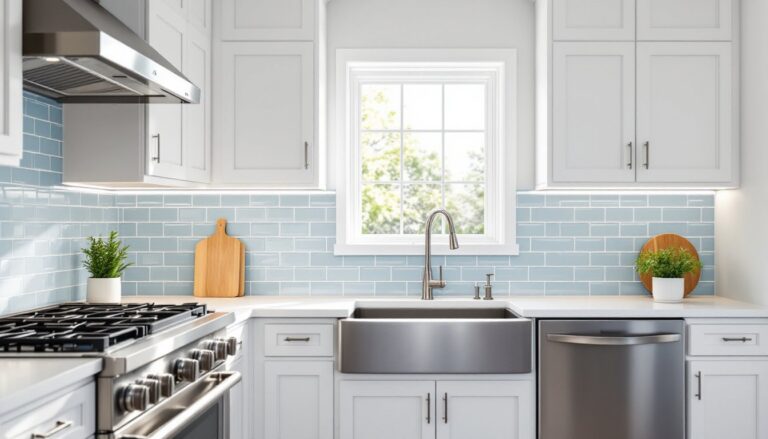
Kitchens demand a tougher standard. Countertop decor has to survive splashes, heat, and the occasional elbow knock. Prioritize materials that can be wiped down quickly: sealed wood, stoneware, metal, and glass.
Live plants are a top choice for kitchens with natural light. Herbs like basil, rosemary, or thyme do double duty as decor and ingredients. Keep them in matching terracotta pots or a single long planter near the window. For low-light kitchens, pothos or snake plants tolerate neglect and still look sharp.
Functional displays make the most sense here. A utensil crock filled with wooden spoons and silicone spatulas, a knife block, or a mortar and pestle used regularly all contribute to the aesthetic without sacrificing utility. For inspiration on organizing these elements, check out resources like The Kitchn for practical kitchen setups.
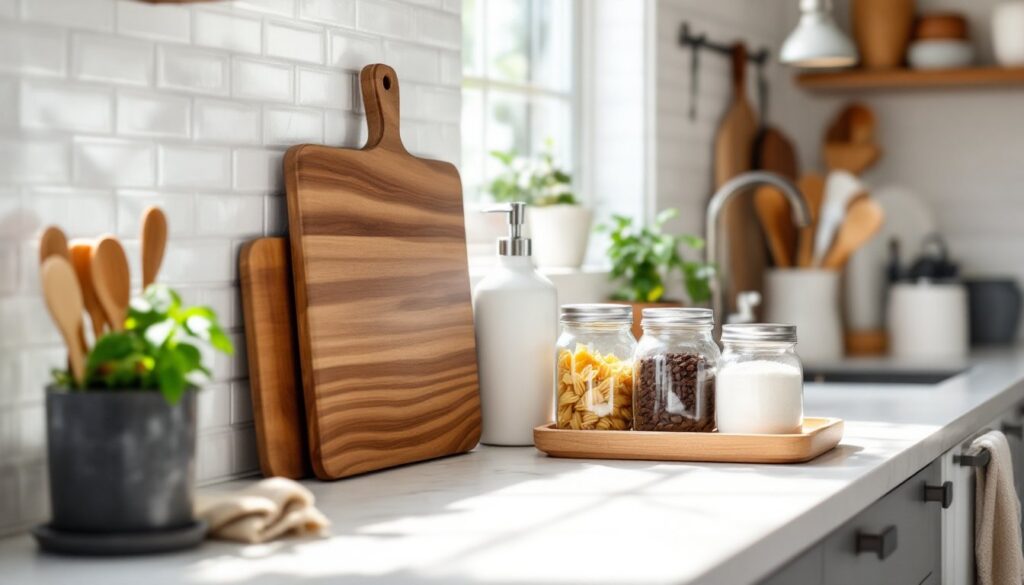
Cutting boards are workhorses that photograph well. A large walnut or maple board leaning against the backsplash adds warmth and natural texture. Bonus: it’s always ready to grab when meal prep starts.
Glass canisters holding flour, sugar, pasta, or coffee beans offer both storage and style. Choose uniform lids and labels for a cohesive look. Avoid overfilling, about two-thirds full looks more intentional than jam-packed jars.
Trays and risers are essential for containing smaller items. A marble or bamboo tray near the stove can hold olive oil, vinegar, and a small salt cellar. A two-tier metal stand works well for fruit or baked goods, freeing up flat space while keeping items visible.
Artwork and small signs can work in kitchens if they’re grease-resistant. A small framed print under glass or a chalkboard menu board adds personality. Keep it away from the cooktop to avoid splatters.
Accessories that blend practicality with minimalist design are curated well on pages like Remodelista’s kitchen countertop guide, which highlights purposeful styling choices. Meanwhile, broader decorating trends for 2026 point toward natural materials and muted palettes that reduce visual clutter.
Bathroom Countertop Styling Tips for a Spa-Like Feel
Bathrooms are high-humidity, high-touch environments. Decor needs to be moisture-resistant and easy to clean. Stone, ceramic, glass, and sealed metal are safe bets. Avoid paper goods, untreated wood, or fabric that’ll mildew.
Soap dispensers and toothbrush holders should look like intentional choices, not drugstore afterthoughts. Swap plastic for ceramic, glass, or matte black metal. Match finishes to the faucet or cabinet hardware for a cohesive feel.
Trays are critical in bathrooms. A small tray near the sink can hold hand soap, lotion, and a ring dish. This keeps daily essentials accessible without letting them sprawl. Stone, resin, or glazed ceramic work well in damp conditions.
Small plants thrive in bathroom humidity. Ferns, air plants, or a small succulent on the counter add life and soften hard tile and glass. Use a pot with drainage or a closed terrarium to avoid water damage on counters.
Towel styling matters even if the towel isn’t on the counter. A neatly folded hand towel beside the sink, or rolled and stacked in a basket, extends the styling to adjacent surfaces. Stick to neutral tones or a single accent color.
Apothecary jars or canisters are great for cotton balls, swabs, or bath salts. Clear glass keeps contents visible: opaque ceramic hides clutter. Either way, uniform containers look more polished than a mix of random packaging.
Mirrors and small art can sit on the counter if space allows, especially in powder rooms. A small framed print or a tabletop mirror on a stand adds dimension. Keep it lightweight and stable, bathrooms aren’t the place for tippy decor.
For broader strategies on balancing aesthetics with usability, many homeowners find value in applying decorating techniques that work across multiple rooms. Similarly, Homedit offers visual inspiration for modern, minimal bathroom setups.
Scent and texture are underrated tools. A small candle, a linen hand towel, or a wood soap dish introduces sensory variety that elevates the experience beyond pure function. Just keep flames away from towels and paper products.
Conclusion
Countertop decor isn’t about perfection. It’s about making daily tasks feel a little more pleasant and creating spaces that reflect how a home is actually used. Start small, one tray, one plant, one upgrade to a soap dispenser. Edit ruthlessly. And remember that the best-styled counters are the ones that don’t get in the way of cooking dinner or brushing teeth.