Butcher block countertops bring warmth, texture, and a lived-in character that stone and laminate just can’t match. They’ve been quietly returning to kitchens over the past few years, and in 2026, they’re showing up in everything from compact urban apartments to sprawling farmhouse renovations. Whether someone’s planning a full remodel or just swapping out a section of countertop, butcher block offers a surprisingly versatile canvas. It’s not just about rustic charm anymore, designers are pairing wood counters with sleek cabinetry, bold tile, and even concrete. This guide walks through fresh ways to incorporate butcher block into a kitchen, from classic islands to unexpected applications beyond the countertop.
Table of Contents
ToggleKey Takeaways
- Butcher block countertops are making a comeback in 2026 due to their repairability, cost-effectiveness ($40–$100 per sq. ft.), and sustainable, eco-friendly properties compared to stone and laminate.
- Classic butcher block island designs shine with edge-grain construction for durability or end-grain for self-healing knife surfaces, with prices varying by wood species and grain orientation.
- Two-tone combinations—such as stone perimeter counters paired with a butcher block island—offer the best balance between wood’s warmth and practical maintenance in high-use kitchen zones.
- Butcher block works beyond kitchens as desk surfaces, bathroom vanities, floating shelves, and workshop benches when sealed appropriately for moisture exposure.
- Maple and walnut are the most popular wood species for butcher block countertop ideas, with mineral oil finishes best for food-contact areas and polyurethane preferred for low-maintenance display surfaces.
- Proper finish selection—mineral oil for prep areas versus polyurethane for islands used mainly for seating—determines maintenance frequency and determines whether repairs are simple or require full refinishing.
Why Butcher Block Countertops Are Making a Comeback
Butcher block counters fell out of favor for a while, overshadowed by granite slabs and quartz composites. But they’re back, and the reasons go beyond aesthetics.
First, they’re forgiving. Unlike stone, butcher block can be sanded, refinished, and repaired. A knife mark or water stain isn’t permanent, it’s just character that can be erased with some 120-grit sandpaper and a fresh coat of oil. That makes them practical for households that actually use their kitchens.
Second, they’re cost-effective. A solid wood butcher block runs $40–$100 per square foot installed, depending on species and thickness. That’s competitive with mid-range quartz and far below premium stone options. For DIYers, pre-cut sections from home centers start around $200–$400 for an 8-foot span, and installation is manageable with basic tools.
Third, sustainability matters now. Many butcher block manufacturers source from responsibly managed forests, and wood counters have a lower carbon footprint than mined stone. When properly maintained, they can last decades, and when they’re finally replaced, they biodegrade instead of sitting in a landfill.
Finally, they pair well with nearly every style. Butcher block works in Scandinavian minimalism, mid-century modern, industrial lofts, and traditional kitchens. It’s one of the few materials that can bridge design eras without looking forced.
Classic Kitchen Island Butcher Block Designs
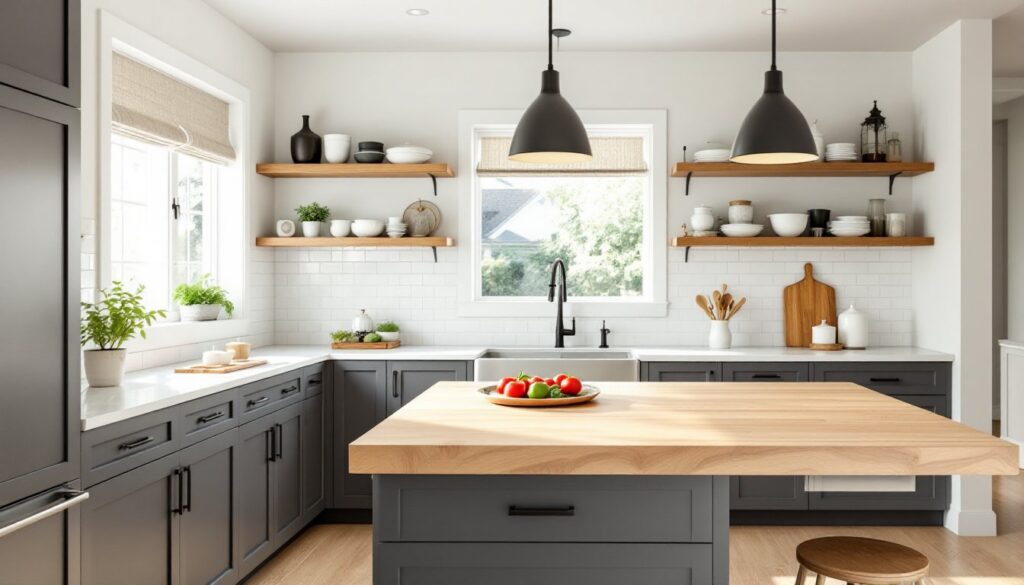
Islands are where butcher block truly shines. A wood surface on a central island creates a natural prep zone, somewhere to roll dough, chop vegetables, or set down groceries, while keeping perimeter counters stone or solid surface for wet work near the sink.
The most straightforward approach is a full-surface island top in edge-grain maple or walnut, typically 1.5 to 2 inches thick. Edge-grain construction (where wood strips are glued on their long edges) offers durability and a clean, linear look. For a working island, this thickness provides enough mass to stay stable during heavy chopping.
End-grain butcher block is the traditional cutting surface, wood fibers are oriented vertically, so knife edges slip between them rather than severing them. It’s self-healing and gentler on knives, but it requires more maintenance and costs about 30–50% more than edge-grain. End-grain tops are typically 2.5 to 4 inches thick and work best when the island is dedicated to prep rather than serving or display.
For waterfall edges, butcher block can wrap down the sides of an island, though this requires careful joinery and matching grain direction. It’s a statement move that works well in contemporary kitchens, but it increases material costs and complexity. Most DIYers should leave waterfall installations to pros unless they’re experienced with woodworking joinery techniques.
Another classic option: undermount the sink into a butcher block island. It’s doable, but the wood needs to be sealed with a waterproof finish (typically marine-grade varnish or epoxy) around the sink cutout. Expect to reseal annually and keep an eye on any signs of swelling or separation.
Modern Farmhouse and Rustic Style Applications
Modern farmhouse kitchens lean heavily on butcher block, but the execution has evolved past distressed paint and Mason jar light fixtures.
One current trend is pairing butcher block with matte black or charcoal cabinetry. The contrast between dark, crisp cabinet fronts and warm wood counters feels grounded without being overly rustic. Shaker-style cabinets in deep tones work especially well here.
Open shelving above a butcher block counter is another farmhouse staple, but it’s more functional when the wood is treated with a food-safe oil rather than polyurethane. Mineral oil or beeswax blends allow the wood to breathe and make it safe for direct food contact. Plan to reapply every 4–6 weeks in high-use areas.
Reclaimed wood counters bring in salvaged character, nail holes, saw marks, color variation, but they’re tricky to source and install. True reclaimed material needs to be de-nailed, planed, kiln-dried, and milled, which adds cost. Many suppliers now offer “reclaimed-look” butcher block that mimics the aesthetic without the structural unknowns.
For rustic cabins or vacation homes, leaving the wood unfinished or lightly oiled showcases natural patina. Expect the surface to darken and develop stains over time. That’s not a flaw, it’s the point. But it’s not ideal for anyone who prefers a pristine, controlled aesthetic.
Mounting butcher block on powder-coated steel brackets instead of traditional cabinetry reinforces the industrial-farmhouse hybrid look. This approach works for a coffee bar, breakfast nook, or secondary prep area.
Two-Tone Countertop Combinations with Butcher Block
Mixing materials is one of the smartest ways to incorporate butcher block without committing an entire kitchen to wood maintenance.
The most common split is stone perimeter counters with a butcher block island. Granite, quartz, or soapstone handles water, heat, and heavy traffic near the sink and stove, while the island becomes a dedicated prep and gathering spot. This setup also helps with resale, buyers often want low-maintenance stone in the main work zones.
Another option is a butcher block section inset into a stone counter. A 24-by-18-inch cutting board area dropped into a quartz counter near the range gives users a built-in prep surface without the upkeep of a full wood counter. The inset should sit flush or slightly recessed, and it can be removable or permanently mounted.
For contemporary kitchens, pairing butcher block with concrete or stainless steel creates an industrial edge. Concrete offers a cool, matte contrast to wood’s warmth, while stainless is practical near sinks and cooktops. Both combinations look intentional rather than budget-driven.
Two-tone doesn’t have to mean two materials. Using different wood species, say, walnut for the island and ash for open shelving, adds visual interest while keeping the palette cohesive. Just make sure the finishes match (oil vs. poly) to avoid maintenance confusion.
One caution: avoid pairing butcher block with laminate in the same sightline. The quality difference is too stark, and it cheapens the overall look. If budget is tight, stick with one material and plan to upgrade in phases.
Creative Uses Beyond Traditional Kitchen Counters
Butcher block isn’t just for countertops, it’s a workhorse material that fits into a surprising number of spaces.
Desk surfaces are a natural extension. A butcher block slab on adjustable legs or wall-mounted brackets creates a warm, solid workspace. Standard 25-inch depth works for most home offices, and the wood is comfortable for long hours at a keyboard. Pair it with a well-organized workspace setup for maximum productivity.
Bathroom vanities get an unexpected upgrade with butcher block. The material needs to be sealed with a waterproof finish (marine varnish or epoxy resin), and any areas around undermount sinks should be inspected regularly for moisture. Skip butcher block in high-humidity bathrooms without adequate ventilation.
Floating shelves in kitchens, living rooms, or workshops benefit from butcher block’s sturdiness. A 2-inch-thick shelf can span up to 48 inches between supports without visible sag, depending on species and load. Mount with heavy-duty ½-inch lag bolts into studs, and use hidden brackets for a cleaner look.
Coffee bars and beverage stations are ideal candidates for small butcher block surfaces. A 24-by-30-inch section is enough for a drip coffee maker, grinder, and mugs. Finish with oil rather than poly to avoid any off-gassing near food and drink.
Laundry room folding stations see heavy use and benefit from a durable, warm surface. Butcher block mounted at 36 inches high (standard counter height) is comfortable for folding and stacking. It holds up better than melamine or particle board and can handle dampness if sealed properly.
Workshop benches might be the original butcher block application. A 3-inch-thick maple or beech top can handle pounding, clamping, and tool impact. Leave it unfinished or treat with boiled linseed oil for a low-maintenance, repairable work surface.
Choosing the Right Wood Species and Finish for Your Space
Not all butcher block is created equal. Species, grain construction, and finish each affect durability, maintenance, and appearance.
Maple is the workhorse. It’s hard (Janka hardness around 1,450), light in color, and widely available. Edge-grain maple is the default for most kitchen islands and prep surfaces. It takes oil and poly finishes equally well.
Walnut brings rich, dark tones and costs about 40–60% more than maple. It’s softer (Janka around 1,010), so it dents more easily, but many people prefer the character it develops over time. Walnut pairs especially well with white or light gray cabinetry.
Cherry starts pale and darkens to a warm reddish-brown with UV exposure. It’s moderately hard (Janka around 950) and stable, making it a good choice for furniture-grade counters where appearance matters more than heavy-duty prep work.
Oak (red or white) offers prominent grain and good hardness (Janka around 1,290–1,360). It’s less common in butcher block but works well for rustic or traditional kitchens. White oak is slightly harder and more water-resistant due to its closed grain structure.
Bamboo isn’t technically wood, but it’s sold as butcher block. Strand-woven bamboo (Janka around 3,000+) is extremely hard and eco-friendly, but it can look busy with its multi-tonal streaks. It’s a solid choice for modern or minimalist spaces.
For finish, the choice boils down to oil vs. film-forming sealers. Mineral oil or butcher block conditioner (often a blend of mineral oil and beeswax) keeps wood food-safe and repairable. It needs reapplication every 4–6 weeks initially, then every 2–3 months once the wood is saturated. This is the right choice for cutting surfaces or anywhere food touches the counter directly.
Polyurethane or water-based poly creates a durable, water-resistant film. It’s easier to clean and requires less frequent maintenance, but once scratched, it needs to be stripped and refinished rather than simply sanded and re-oiled. Use poly for non-prep areas like islands used mainly for seating or display.
Tung oil or Danish oil splits the difference, slightly more protection than mineral oil, less buildup than poly. These finishes penetrate the wood and harden, offering moderate water resistance while still allowing minor repairs.
Avoid using vegetable or olive oil. They go rancid and leave a sticky, unpleasant residue. Stick with mineral oil or products specifically formulated for butcher block maintenance.
Wear nitrile gloves and work in a ventilated area when applying oil or poly. Some finishes, especially oil-soaked rags, can spontaneously combust, spread them flat to dry or store in a sealed metal container.
Conclusion
Butcher block countertops offer a rare combination of warmth, practicality, and design flexibility. They’re not precious, they age, scratch, and develop character, but that’s exactly why they work. Whether someone’s dropping a wood island into an all-white kitchen or building a reclaimed-look counter for a farmhouse remodel, butcher block adapts. The key is matching the wood species and finish to how the space will actually be used, not just how it looks on day one.