A rustic bedroom isn’t about buying the right throw pillow, it’s about creating a space that feels grounded, warm, and built to last. The best rustic bedrooms blend natural materials, intentional lighting, and layered textures into something functional, not just photogenic. Whether someone’s working with a log cabin or a suburban split-level, the principles stay the same: real wood, honest finishes, and a focus on comfort over trend. This guide walks through the specific materials, color choices, and finishing details that turn a bedroom into a retreat worth closing the door on the rest of the house for.
Table of Contents
ToggleKey Takeaways
- Cozy rustic bedroom ideas prioritize solid wood furniture, natural fibers, and honest finishes over trend-driven décor or synthetic materials.
- Use warm lighting sources at different heights—bedside lamps, pendant lights, and Edison bulbs set to 2700K—to create an authentic cozy atmosphere while avoiding harsh overhead lighting.
- Layer textures with 100% cotton or linen bedding, wool blankets, and area rugs in natural fibers like jute or sisal to add warmth and visual interest without bulk.
- Paint walls in muted, earthy tones like soft grays, warm creams, and taupe, then test samples for 24 hours in different lighting conditions before committing.
- Incorporate rustic wood accents through DIY bed frames, reclaimed accent walls, or floating shelves using quality brackets rated for 50+ lbs to ground the space functionally.
- Focus on minimal decor—single artwork pieces, wrought iron hardware, and storage baskets—ensuring every element serves a purpose rather than creating visual clutter.
What Defines a Cozy Rustic Bedroom Style?
Rustic style comes down to three core principles: natural materials, visible texture, and a lack of fussiness. It’s not shabby chic with distressed paint, and it’s not farmhouse with shiplap on every surface.
A true rustic bedroom prioritizes solid wood furniture over veneers, raw or minimally treated finishes over high-gloss lacquer, and organic textiles like wool, linen, and cotton over synthetics. The aesthetic pulls from mountain lodges, old barns, and pre-industrial craftsmanship, places where materials were chosen for durability, not decoration.
Key markers include:
- Exposed wood grain (knotty pine, reclaimed oak, rough-sawn cedar)
- Neutral, earthy tones with minimal contrast
- Handmade or artisan elements (woven baskets, forged iron hardware)
- Minimal wall decoration: the materials themselves do the work
Rustic doesn’t mean unfinished. Wood should still be sealed or oiled to prevent splintering and moisture damage, especially in humid climates. A coat of matte polyurethane or tung oil protects without adding shine.
If the room has drywall, that’s fine, rustic is about what someone adds, not what they remove. Wood trim, a reclaimed headboard, and the right textiles can shift the feel without tearing out existing finishes.
Natural Wood Elements That Bring Warmth
Wood is the backbone of rustic design. The species, finish, and application all matter.
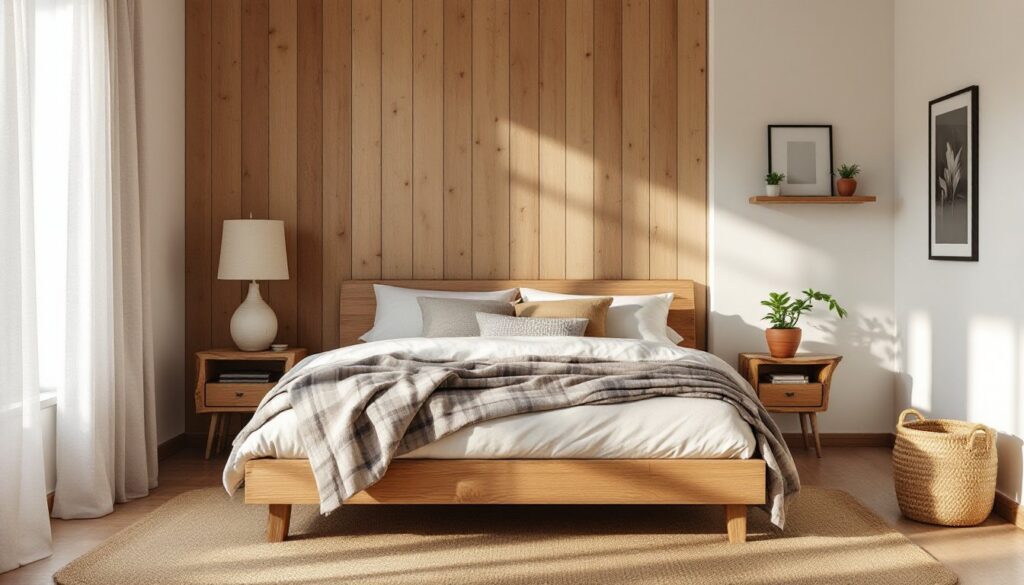
Bed frames are the obvious starting point. Solid pine, oak, or cedar frames with visible joinery (mortise-and-tenon, dovetail, or even simple butt joints with exposed bolt heads) set the tone. Platform beds work well here, they’re structurally simple and don’t require a box spring, which keeps the profile low and uncluttered.
For a DIY build, rough-sawn 2×6 or 2×8 lumber makes a sturdy frame. Actual dimensions are 1.5″ x 5.5″ and 1.5″ x 7.25″, respectively. Sand edges lightly to remove splinters, then finish with Danish oil or a water-based matte polyurethane. Skip stains, they mask the grain.
Accent walls are another high-impact option. Reclaimed barn wood, tongue-and-groove pine, or even rough-cut cedar can be nailed directly to studs (16″ on center, standard framing). Fastening can be face-nailed with 2″ finish nails or edge-nailed if using tongue-and-groove. A laser level keeps rows straight. Let the wood acclimate indoors for at least 48 hours before installation to prevent warping.
If reclaimed wood isn’t in the budget, 1×6 or 1×8 pine boards from a big-box store work fine. Actual dimensions are 3/4″ x 5.5″ and 3/4″ x 7.25″. They’re uniform, cheap, and easy to work with. Apply a wire brush along the grain before finishing to raise texture and give new wood an aged look.
Floating shelves made from 2×10 or 2×12 lumber (actual 1.5″ x 9.25″ or 11.25″) add function and visual weight. Use hidden bracket systems rated for at least 50 lbs per shelf. Mount to studs, not just drywall anchors, especially for books or decor.
Avoid mixing too many wood species in one room. Stick to warm tones (pine, cedar, oak) or cool tones (walnut, maple), not both.
Layered Textiles for Ultimate Comfort
Rustic bedding is about weight, texture, and natural fibers, not thread count.
Start with a 100% cotton or linen duvet cover in a solid neutral (off-white, gray, taupe). Cotton flannel works in colder climates: linen breathes better in warmer ones. Skip the synthetic microfiber, it pills and doesn’t age well.
Layer a wool or cotton blanket at the foot of the bed. Pendleton-style wool blankets in muted plaids or stripes fit the aesthetic and add warmth without bulk. They’re machine-washable on a gentle cycle, which matters for real-world use.
Throw pillows should vary in size and texture. Mix 18″x18″ and 22″x22″ covers in materials like chunky knit, burlap, or washed linen. Avoid anything with sequins, ruffles, or busy patterns. Two to four pillows max, more than that and it stops being functional.
Adding a faux fur or sheepskin throw over a chair or bench softens hard edges and introduces tactile variety. Real sheepskin is durable and naturally stain-resistant, but synthetic options are easier to clean. Spot-treat with mild detergent and air-dry flat.
Window treatments should be simple: canvas or linen curtains hung from iron or wood rods. For blackout capability, add a separate blackout liner instead of buying pre-lined curtains, it’s easier to wash and replace. Curtains should just kiss the floor or hang 1″ above it, not puddle.
Area rugs ground the space. A natural fiber rug (jute, sisal, or wool) in a solid or subtle pattern works best. Jute is affordable but scratchy underfoot: wool is softer and more durable but pricier. Size matters: the rug should extend at least 18″–24″ beyond each side of the bed.
Rustic Color Palettes That Create Calm
Rustic palettes are pulled from nature, not a trend forecast. Think forest floor, not Instagram feed.
Base colors include:
- Warm whites and creams (Benjamin Moore Swiss Coffee, Sherwin-Williams Alabaster)
- Soft grays (Agreeable Gray, Repose Gray)
- Warm taupes and beiges (Accessible Beige, Edgecomb Gray)
Accent colors should be muted, not saturated. Deep forest green, charcoal, rust, or slate blue work as pillows, throws, or a single accent wall. Avoid bright reds, turquoise, or anything neon.
Wall paint should have a matte or eggshell finish. Flat paint hides imperfections better, but eggshell is easier to clean. Coverage is typically 350–400 square feet per gallon for quality paint. Always prime if painting over dark colors or bare drywall.
For a subtle accent wall, consider a limewash or milk paint finish. These breathable finishes create a soft, chalky texture that works well in rustic spaces. They require more prep than latex, surfaces must be clean, porous, and free of sealers, but the result is authentic. Decorating ideas often recommend limewash for its organic, hand-applied look.
Wood tones count as color. If the bed frame is dark walnut, balance it with lighter walls and textiles. If walls are clad in knotty pine, keep furniture and fabrics in cooler neutrals to prevent the room from feeling too orange.
Test paint samples on at least two walls, one that gets natural light, one that doesn’t. Colors shift dramatically depending on exposure. Let the sample dry for 24 hours before deciding.
Lighting Ideas to Enhance the Cozy Atmosphere
Overhead lighting is the enemy of cozy. Rustic bedrooms need multiple low, warm light sources at different heights.
Bedside lamps are non-negotiable. Look for ceramic, wood, or iron bases with linen or burlap shades. Bulbs should be 2700K (warm white), not the harsh 5000K daylight bulbs. Aim for 40–60 watts equivalent in LED. Adjustable swing-arm lamps work well for reading without taking up nightstand space.
If overhead lighting is necessary, install a dimmer switch. Replacing a standard switch with a dimmer is straightforward: turn off the breaker, remove the old switch, connect the dimmer’s wires (typically black to black, ground to ground), and secure it in the box. Most dimmers are compatible with LED bulbs, but check the package, some older models cause flickering.
Pendant lights with Edison bulbs or cage-style shades add industrial-rustic character. Hang them 30″–36″ above a nightstand to avoid head clearance issues. Wire them to a wall switch or use a plug-in pendant kit if running new electrical isn’t feasible.
String lights or low-voltage LED strips behind a headboard or under floating shelves add ambient glow without glare. Use warm white, not cool white, and hide the power cord with cable raceways or behind furniture.
Candles (real or battery-operated) in hurricane lanterns or iron holders add flicker and shadow. If using real candles, place them on non-combustible surfaces away from textiles. Battery-operated flameless candles with timers are safer and still effective.
Natural light control matters too. Blackout curtains or cellular shades keep early sun out but should be fully retractable during the day. Cozy bedroom designs often layer sheer panels behind heavier drapes for flexibility.
Rustic Decor Accents and Finishing Touches
Rustic decor should feel collected, not coordinated. Every piece should have a reason for being there.
Artwork can be minimal. A single large piece, black-and-white landscape photography, a vintage map, or an abstract in muted tones, anchored above the bed is enough. Frame it simply: wood, black metal, or no frame at all (canvas prints work fine). Avoid gallery walls in rustic spaces: they’re too busy.
Hardware and fixtures matter more than people think. Swap out builder-grade drawer pulls and closet handles for iron, bronze, or blackened steel. Rustic hardware often has visible texture, hammered, forged, or slightly irregular. Cabinet hardware is easy to replace: just match the hole spacing (standard is 3″ or 3.75″ center-to-center for pulls) or drill new holes and fill old ones with wood filler.
Storage baskets in wicker, wire, or canvas keep clutter contained without adding visual noise. Slide them under the bed or stack them on open shelving. Label them if needed, but use kraft paper tags or stenciled labels, not plastic.
Mirrors should have chunky wood or metal frames. Leaning a full-length mirror against the wall instead of hanging it adds casual, unfinished appeal. Secure the top with furniture straps anchored to the wall to prevent tipping, especially important in homes with kids or pets.
Greenery brings life without pattern. A single large potted plant (snake plant, fiddle leaf fig, or rubber plant) in a simple terra cotta or ceramic pot works better than a dozen small ones. Low-maintenance options are key, rustic doesn’t mean fussy.
Avoiding clutter is critical. For inspiration on how to pair rustic accents with broader decorating ideas, focus on quality over quantity. If something doesn’t serve a purpose or add texture, leave it out.
Conclusion
A cozy rustic bedroom doesn’t require a gut renovation or a truckload of reclaimed timber. It’s built on smart material choices, layered textures, and lighting that actually works for winding down. Focus on solid wood, natural fibers, and a restrained palette, and the space will feel intentional without trying too hard. Start with one or two high-impact changes, an accent wall, new bedding, or better lighting, and build from there. The goal is a room that feels like a retreat, not a showroom.