Deck fencing isn’t just about keeping kids and pets safe, though it does that. It’s about framing your outdoor space, blocking sightlines from neighbors, and adding architectural punch to what might otherwise be a floating platform of boards. Whether you’re building new or replacing wobbly pickets from 2003, the fencing you choose sets the tone for how your deck feels and functions. This guide covers practical options across wood, metal, composite, and hybrid designs, with real-world notes on cost, maintenance, and installation complexity.
Table of Contents
ToggleKey Takeaways
- Deck fencing ideas combine safety compliance, privacy, and aesthetic appeal—budget 15–25% of your total deck cost for the railing system to signal quality and maintain property value.
- Wood railings (pressure-treated pine at $15–$30 per linear foot, cedar at $25–$45) require staining every 2–3 years, while metal and composite alternatives offer lower maintenance but higher upfront costs.
- Modern deck fencing options range from transparent cable systems ($75–$150 per linear foot) and aluminum railings ($40–$80) for unobstructed views to composite ($50–$90) and vinyl ($30–$60) for durability without staining.
- Horizontal slat designs visually lengthen contemporary decks but require extra engineering and mid-span blocking on runs longer than 6 feet to prevent sagging and maintain the 4-inch-sphere safety rule.
- Creative deck fencing styles—glass panels, mixed materials, privacy screens, and decorative lattice—can transform railings from functional to focal points, though they must meet local guardrail load and spacing requirements before installation.
Why Deck Fencing Matters for Your Home
Deck fencing, or deck railing, depending on your region, serves three non-negotiable roles: safety, privacy, and structural integrity. Most jurisdictions require guardrails on decks more than 30 inches above grade, per the International Residential Code (IRC). That means any deck higher than a couple of steps needs a railing system that’s at least 36 inches tall (42 inches in some commercial or multi-family settings). Balusters or infill panels must prevent a 4-inch sphere from passing through, a standard designed to protect small children.
Beyond code compliance, fencing defines how your deck relates to the yard and neighboring properties. A solid-panel fence offers full privacy for hot tubs or dining areas. An open cable or slat design preserves sightlines and airflow, critical on hillside lots or coastal properties where views justify the higher price tag. Fencing also ties the deck visually to the house. Matching materials (cedar deck with cedar rails, composite deck with composite or metal rails) creates continuity. Mixing materials can work, think Trex decking with black aluminum cable rails, but requires a deliberate design choice, not an afterthought.
Finally, fencing affects resale value and curb appeal. A well-built, attractive railing system signals that the deck was maintained. Peeling paint, wobbly posts, or mismatched sections do the opposite. Budget 15–25% of your total deck cost for the railing system, more if you’re choosing premium materials like stainless steel cable or custom metalwork.
Classic Wood Deck Fencing Options
Wood remains the most common deck fencing material in the U.S., especially for ground-level and mid-height decks. Pressure-treated pine is the budget standard: posts, rails, and balusters run $15–$30 per linear foot installed, depending on design complexity. Expect to stain or seal it every 2–3 years to prevent rot and UV damage. Treated lumber weathers to gray-brown without finish, which some homeowners like for a weathered cottage-style aesthetic.
Cedar and redwood offer natural rot resistance and richer color. Cedar costs $25–$45 per linear foot installed and holds stain better than pine. It’s light enough to work without a helper for most sections, though 6×6 posts still require two people. Redwood is pricier and harder to source outside the West Coast but weathers to a silver-gray patina that’s iconic in mid-century modern designs.
All wood railings require the same structural approach: 4×4 posts anchored to the deck frame or footings every 4–6 feet, 2×4 or 2×6 top and bottom rails, and balusters spaced no more than 4 inches apart. Use galvanized or stainless fasteners, regular screws rust through in 5–7 years. Through-bolting posts to rim joists with 1/2-inch carriage bolts is code in many areas and far stronger than lag screws alone.
Horizontal vs. Vertical Slat Designs
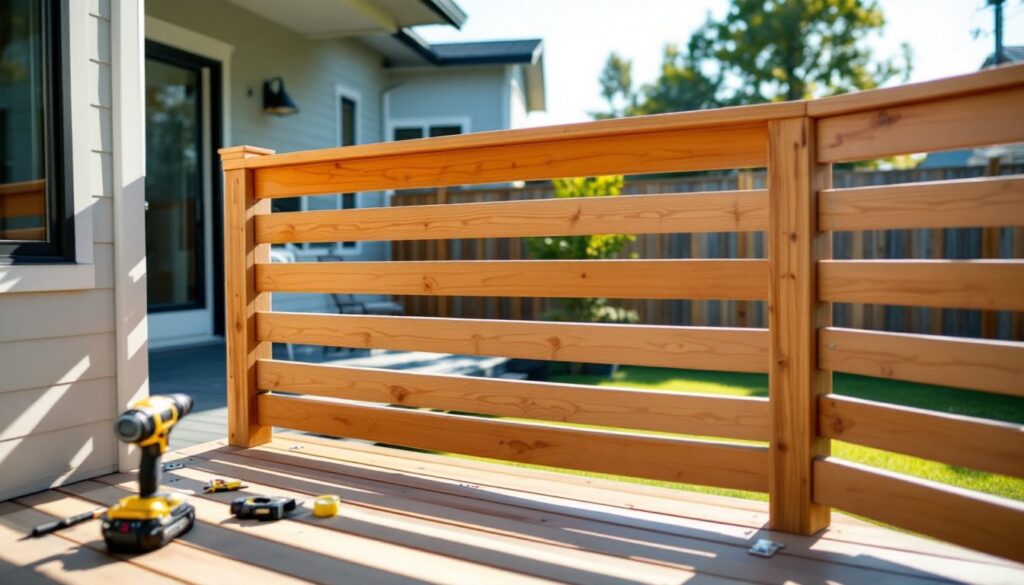
Vertical balusters are traditional: 2×2 or turned spindles running floor to top rail. They’re fast to install with a jig and blend with most home styles. Horizontal slat fencing, using 1x4s or 1x6s stacked flat between posts, has surged in popularity for modern and transitional homes. It visually lengthens the deck and works especially well on split-level or hillside builds where you want to emphasize the horizontal plane.
Horizontal slats require more engineering. Each board must be fastened to the posts or to hidden vertical supports, not just friction-fit. Sagging is common if you skip mid-span blocking on runs longer than 6 feet. Use kiln-dried lumber or composite boards to minimize warping. Spacing is trickier, too, 1.5-inch gaps between boards keep the 4-inch-sphere rule in check and allow water drainage, but you’ll need more fasteners and time. Budget an extra 20–30% in labor versus vertical balusters.
Visually, horizontal slats suit contemporary homes with clean lines and large windows. Vertical balusters fit Craftsman, Colonial, and farmhouse styles. There’s no performance difference if both are built to code, it’s purely aesthetic and installation preference.
Modern Metal and Cable Railing Ideas
Metal railings, aluminum, steel, or stainless cable systems, offer durability and sightline transparency that wood can’t match. Aluminum railing kits (Westbury, Deckorators, Fortress) run $40–$80 per linear foot and come in black, bronze, or white powder coat. They’re lightweight, rust-proof, and install faster than wood because posts and rails are pre-cut with brackets. Most systems use aluminum balusters or tempered glass panels. Aluminum is a solid mid-tier choice for decks with views or where maintenance is a dealbreaker.
Cable railing systems use horizontal stainless steel cables (typically 1/8-inch or 3/16-inch diameter) tensioned between posts. Feeney CableRail and AGS Stainless are the go-to brands. Expect $75–$150 per linear foot installed, mostly driven by post and tensioning hardware costs. You’ll need sturdy posts, steel, aluminum, or structural wood, spaced no more than 4 feet apart to prevent cable sag. Cables run 3 inches apart vertically to meet the 4-inch-sphere rule.
Cable systems demand precision. Each cable must be tensioned to 200–300 pounds using threaded fittings or swage tools. Under-tensioned cables sag and fail inspection: over-tensioned cables can pull posts inward. DIY installation is doable if you’re comfortable drilling perfectly aligned holes and using a tension gauge, but many homeowners hire a specialty installer. The payoff is unobstructed views and virtually zero maintenance beyond occasional wipe-downs.
Steel and wrought iron custom railings offer the most design flexibility, curved sections, decorative scrollwork, integrated lighting, but cost $100–$300+ per linear foot. These are welded or bolted assemblies, often powder-coated. Structural steel posts can double as deck support columns on elevated builds. If you’re planning intricate metalwork, involve a fabricator early in the design phase to confirm load paths and attachment points.
Low-Maintenance Composite and Vinyl Fencing
Composite railing, made from wood fiber and plastic (Trex, TimberTech, Fiberon), mirrors the low-maintenance promise of composite decking. Cost runs $50–$90 per linear foot installed, comparable to aluminum but with a wood-like profile. Composite rails and balusters resist rot, insects, and UV fade. They won’t splinter, which matters for families with bare-footed kids. Colors range from grays and browns to black and white.
Composite systems use aluminum or steel post sleeves with composite cladding, giving you structural strength without exposed metal. Top and bottom rails are hollow composite extrusions that snap or screw onto brackets. Balusters are either round composite spindles or square aluminum tubes with composite sleeves. Installation is straightforward with basic tools, no special jigs or tensioning required.
The trade-off is flexibility. Composite rails don’t bend or curve like metal, so they’re less suited to radius decks or non-linear layouts. And while they’re marketed as “maintenance-free,” most manufacturers recommend annual washing with soap and water to prevent mildew in shaded or humid areas. Darker colors can fade 10–15% over 10 years in full sun, though warranties often cover excessive fading.
Vinyl (PVC) railing is the lightest option, both in weight and appearance. White vinyl runs $30–$60 per linear foot and installs with routed posts and snap-fit rails. It’s common in coastal or tropical climates where saltwater corrodes metal and UV intensity is high. Vinyl doesn’t rust, rot, or need paint, but it can yellow over time and lacks the heft of wood or metal. It’s best for straightforward perimeter railings on smaller decks, not grand architectural statements.
Both composite and vinyl systems meet IRC load requirements (200 pounds concentrated at any point on the top rail), but always verify the manufacturer’s engineering data and confirm local code acceptance before buying.
Creative Deck Fencing Styles for Privacy and Aesthetics
Standard railing gets the job done, but creative infill and hybrid designs can turn fencing into a focal point. Horizontal plank privacy screens, full-height 1×6 or 1×8 cedar or composite boards with minimal gaps, block sightlines from neighbors or busy streets. These work well on one or two sides of a deck rather than the full perimeter, preserving openness where views or airflow matter. Frame the screen with 4×4 posts and 2×4 framing, then face-screw or hidden-fasten planks. Stain or paint to match the house trim.
Mixed-material designs combine wood posts and top rails with metal balusters or cable infill. This approach, common in modern farmhouse and transitional homes, gives you the warmth of wood where hands touch (top rail) and the clean lines of metal below. Kits are available, or you can DIY by routing wood rails to accept square aluminum balusters.
Glass panel railings use tempered or laminated glass set into aluminum channels. Cost is high ($150–$250 per linear foot), but the result is nearly invisible fencing, ideal for rooftop decks, waterfront properties, or anywhere the view is the main asset. Glass must be 1/4-inch tempered minimum, often 3/8-inch or 1/2-inch for wind load. Cleaning is constant in dusty or pollen-heavy areas, and glass can show water spots and fingerprints. Some homeowners love it: others find it high-maintenance.
Lattice Panels and Decorative Screens
Lattice panels, diagonal or square grid patterns in wood or vinyl, offer partial privacy and a cottage or garden-inspired look. Standard 4×8 sheets cost $20–$60 and install quickly between posts with trim molding. Lattice alone doesn’t meet guardrail code (gaps exceed 4 inches), so it’s used as an accent above a code-compliant lower section or as skirting below the deck.
Decorative metal or composite screens, laser-cut patterns, geometric panels, or slatted privacy grilles, add architectural detail and shade. Companies like Bok Modern and Parasoleil offer semi-custom designs. Screens mount to posts or hang as standalone panels. They’re pricier ($100–$400 per panel) but create shadow patterns and visual interest that plain balusters can’t. These work best as accent sections, over a stair landing, flanking a gate, or framing a seating nook, rather than full-perimeter fencing.
For any creative design, confirm it meets local guardrail load and infill spacing requirements before installation. Inspectors will test it.