The ceiling is the most overlooked element of a covered patio, and that’s a missed opportunity. While homeowners obsess over furniture, flooring, and lighting, the expanse overhead often gets painted builder-grade white and forgotten. But the ceiling sets the tone for the entire space. It can add warmth, define zones, integrate lighting, and even improve acoustics. Whether renovating an existing structure or finishing a new build, choosing the right ceiling treatment makes the difference between a forgettable overhang and an outdoor room that rivals any interior space.
Table of Contents
ToggleKey Takeaways
- Covered patio ceiling ideas go far beyond basic finishes—the right ceiling treatment impacts comfort, acoustics, lighting integration, and overall aesthetic appeal.
- Wood planks like cedar and pressure-treated pine remain top choices for warmth and character, while PVC beadboard and metal panels offer durable, low-maintenance alternatives.
- Material selection must account for outdoor conditions including moisture, UV exposure, and temperature swings; use exterior-rated finishes, stainless steel fasteners, and rot-resistant woods to ensure longevity.
- Proper lighting planning is essential during construction; recessed cans, pendant fixtures, and LED strips transform the patio into an evening-ready outdoor room.
- Creative alternatives like bamboo panels, outdoor fabric systems, and fiber cement panels provide design flexibility while meeting specific climate and fire-code requirements.
Why Your Covered Patio Ceiling Deserves Special Attention
A patio ceiling isn’t just a roof underside, it’s a design surface that affects how the space feels and functions. Standard drywall or exposed joists work fine structurally, but they do nothing to soften sound, add visual interest, or tie the patio into the home’s aesthetic.
First, there’s the practical angle. Outdoor ceilings face moisture, UV exposure, temperature swings, and occasional pest traffic. Materials need to withstand these conditions without warping, fading, or harboring mold. That means pressure-treated or rot-resistant lumber, exterior-rated paints and stains, or corrosion-resistant metal panels.
Second, the ceiling impacts comfort. A dark, recessed ceiling can make a patio feel cave-like, while a light or reflective surface bounces daylight and makes the area feel larger. Texture matters too, smooth surfaces echo noise, while wood planks or fabric panels absorb sound.
Finally, the ceiling is prime real estate for lighting and ceiling fans. Planning the material and layout early ensures you can install recessed lights, track systems, or pendant fixtures without wrestling with wiring after the fact. If the patio ceiling is already finished, surface-mount options and retrofit cans are available, but it’s easier to rough in electrical during construction.
Wood Plank Ceilings for Warmth and Character
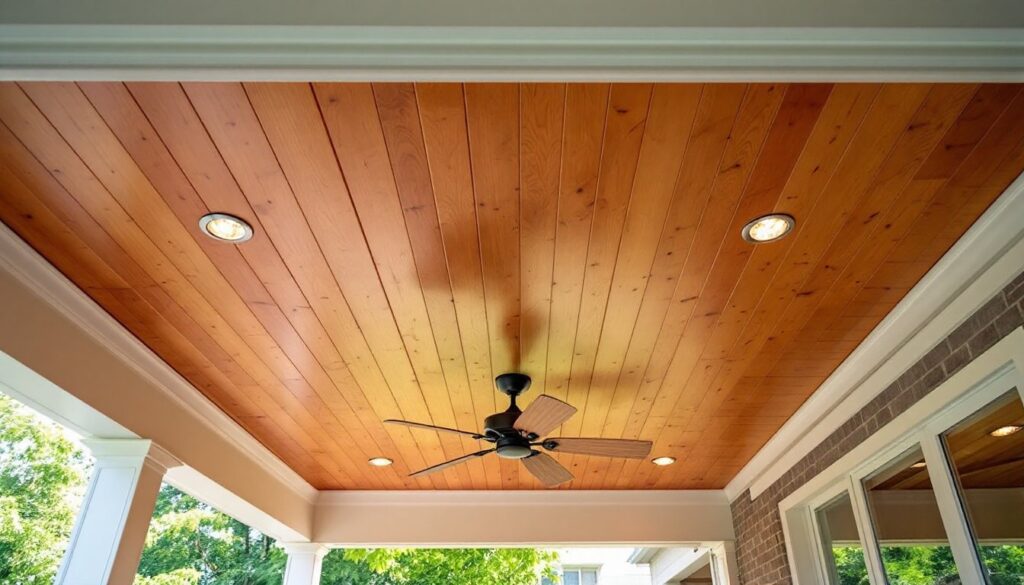
Wood is the default choice for a reason, it’s warm, versatile, and pairs with nearly any architectural style. But not all wood ceilings are created equal. The species, finish, and installation method all affect durability and appearance.
Cedar is a top pick for outdoor applications. It’s naturally resistant to rot and insects, weathers to a silver-gray patina if left untreated, and smells great. Expect to pay $3–$6 per linear foot for 1×6 or 1×8 tongue-and-groove cedar, depending on grade and region. Redwood offers similar benefits but costs more and may be harder to source outside the West Coast.
For budget-conscious projects, pressure-treated pine works well when stained or painted. It’s widely available and affordable (around $1–$2 per linear foot), but it lacks the natural beauty of cedar and requires a finish to prevent weathering. Composite decking planks are another option, they won’t warp or splinter, and they come in a range of wood-grain textures and colors. Installation is similar to wood, and most composite brands are rated for overhead use.
Fastening matters. Use stainless steel or coated screws to avoid rust streaks. If installing tongue-and-groove, a pneumatic finish nailer speeds up the job and hides fasteners in the groove. For exposed-fastener looks, common in modern or industrial designs, countersink screws slightly and fill with wood putty if painting, or leave proud for a rustic effect.
One caveat: if the patio is attached to the house and shares a roofline, check local building codes. Some jurisdictions require fire-rated materials near the home’s exterior walls, and natural wood may not qualify without treatment.
Beadboard and Tongue-and-Groove Options
Beadboard is tongue-and-groove paneling with narrow, evenly spaced grooves that create a classic cottage or farmhouse look. It’s available in solid wood, MDF, and PVC. For outdoor use, stick with PVC beadboard, it won’t rot, swell, or need repainting, and it installs just like wood. Brands like Azek and KOMA offer exterior-rated beadboard in 8-foot and 10-foot lengths. Cost runs $2–$4 per linear foot.
PVC beadboard comes primed or in solid colors (white, beige, gray). It’s lightweight, cuts with a standard miter saw, and accepts paint if you want a custom color. The grooves add subtle texture without overwhelming the space, and the material is ideal for covered patios with partial sun exposure, it won’t fade or crack like painted MDF.
Installation is straightforward: fasten panels perpendicular to ceiling joists with trim-head screws every 12–16 inches. Use a level or chalk line to keep the first row straight, beadboard is unforgiving if it starts crooked. Finish edges with trim or a frieze board to hide cut ends.
Modern Metal and Corrugated Panels
Metal ceilings bring an industrial or contemporary edge, and they’re among the most durable options. Corrugated metal panels, the kind you see on barns and sheds, work surprisingly well in modern patio designs, especially when paired with exposed beams or minimalist furniture.
Galvanized steel is the budget option (around $1–$2 per square foot), but it can look utilitarian. For a refined finish, consider prefinished steel panels in matte black, bronze, or white. These cost $3–$5 per square foot and resist rust better than raw galvanized. Aluminum panels are lighter and won’t rust, but they dent more easily and cost slightly more.
Installation requires purlins or furring strips screwed to the ceiling joists, then the panels are fastened with self-tapping metal screws and rubber washers (to prevent leaks if the ceiling is also the roof deck). Panels overlap by one corrugation, and you’ll need closures or foam strips at the edges to block insects and debris.
Metal ceilings amplify sound, raindrops and wind can be noisy, so they’re better suited to patios used for entertaining than quiet reading nooks. On the plus side, they reflect light and stay cool, making them ideal for hot climates. Integrating outdoor lighting fixtures into metal ceilings requires planning, as cutting holes in corrugated panels can be tricky. Surface-mount fixtures or pendant lights hung from the beams are simpler solutions.
Stained Wood vs. Painted Finishes
Wood ceilings offer two finish paths: stain or paint. Each has trade-offs.
Staining preserves the wood grain and requires less maintenance. Use an exterior-grade penetrating stain (semi-transparent or solid) with UV inhibitors and water repellent. Brands like Cabot, Behr, and Olympic make stains rated for horizontal surfaces. Reapplication is needed every 3–5 years, depending on sun exposure. Stain won’t peel, so maintenance is easier than paint, just clean and recoat.
Painting offers unlimited color options and a cleaner, more modern look. Use 100% acrylic exterior paint with a primer if the wood is raw or previously stained. Two coats are standard. Painted ceilings need repainting every 5–8 years as the finish weathers, and peeling paint is a pain to scrape and prep.
For pressure-treated lumber, wait 6–8 weeks after installation before staining or painting, the wood needs to dry and off-gas preservatives. Cedar and redwood can be finished immediately.
If the patio is semi-enclosed or fully screened, a water-based polyurethane topcoat over stain or paint adds durability and makes cleaning easier. Skip this step for fully exposed ceilings, poly can cloud or yellow under intense UV.
Creative Alternatives: Bamboo, Fabric, and Outdoor-Rated Materials
Beyond wood and metal, several creative materials work for patio ceilings, especially if the space is partially protected or under a secondary roof.
Bamboo panels or rolled bamboo fencing bring a tropical or Zen vibe. They’re lightweight, affordable ($1–$3 per square foot for panels), and easy to install with a staple gun or small screws. Bamboo weathers to gray over time and isn’t as durable as wood, but it’s perfect for seasonal patios or structures where the ceiling is shaded by a solid roof above. Pair bamboo ceilings with natural-fiber outdoor rugs and rattan furniture for a cohesive look inspired by coastal patio designs.
Outdoor fabric stretched on a frame or cable system creates a soft, draped ceiling that filters light and adds intimacy. Use solution-dyed acrylic fabric (like Sunbrella) rated for UV and mildew resistance. Fabric ceilings work best in pergolas or pavilions where airflow prevents moisture buildup. Installation involves tensioning cables or rods across the frame, then clipping or sewing the fabric in place. This isn’t a permanent ceiling, plan to remove and clean the fabric annually.
Fiber cement panels (like HardiPanel) offer a durable, fire-resistant alternative to wood. They come smooth or textured, accept paint well, and won’t rot. Panels are heavy (50+ pounds for a 4×8 sheet), so installation is a two-person job and requires blocking between joists for support. Fiber cement costs $1.50–$3 per square foot and is a smart choice near grills or fire pits where fire codes are strict.
Vinyl soffit panels are another budget-friendly option. They’re designed for eaves but work fine for patio ceilings. Vented panels improve airflow, and solid panels are available in white, beige, and wood-grain finishes. Cost is around $1–$2 per square foot. Vinyl won’t rot or need painting, but it can look cheap if not detailed well. Use crown molding or trim to finish edges and disguise the plastic appearance.
Lighting Integration Ideas for Your Patio Ceiling
Lighting transforms a patio from daytime-only to an evening destination, and the ceiling is the logical place to put it.
Recessed cans are the cleanest look. Use IC-rated, airtight housings if the ceiling is also the roof deck, and choose LED retrofit kits rated for damp or wet locations (depending on exposure). Space cans 4–6 feet apart for even illumination. Dimmers are essential, full brightness kills the mood outdoors. Budget $25–$50 per fixture installed, not including wiring.
Surface-mount fixtures work when recessed lights aren’t feasible. Porch lights, flush-mounts, or small drum fixtures attach directly to a junction box. Look for fixtures with dark sky compliance (shielded bulbs that don’t glare upward) if local ordinances require it.
Pendant lights hung from exposed beams or hooks add style and task lighting over dining tables or seating areas. Use outdoor-rated pendants with sealed sockets and weather-resistant finishes. String 12/2 or 14/2 Romex along the beam inside a conduit or paintable cable channel for a clean look.
String lights remain popular for a reason, they’re inexpensive, flexible, and forgiving. Commercial-grade Edison bulb strings with rubber or silicone sockets last longer than hardware-store versions. Run them in parallel lines, zigzags, or along the perimeter. For a permanent install, staple light clips to the ceiling or beams: for seasonal use, removable hooks work fine. Check the total wattage and use a GFCI-protected outlet.
LED strip lights hidden in ceiling trim or along beams provide subtle accent lighting. Use IP65-rated strips for damp locations and IP67 or IP68 for wet areas. Strips need a transformer and controller (often sold separately), and most systems allow dimming and color changes. This is a good DIY project if you’re comfortable with low-voltage wiring: otherwise, hire an electrician. Expect to spend $50–$150 for materials depending on run length.
No matter the fixture type, all wiring must meet National Electrical Code (NEC) standards for outdoor installations. That means GFCI protection, proper junction boxes, and conduit where required. Permits may be needed depending on scope, check with your local building department before roughing in circuits. For complex lighting plans or if you’re uncomfortable with electrical work, hiring a licensed electrician is a safer and often faster choice than troubleshooting mistakes later.