A deck without a roof is just a promise half-kept. Rain cuts gatherings short. Sun bleaches furniture. Snow piles up where you’d rather have a dry spot to stack firewood. Adding a roof to your deck turns underused square footage into a genuine outdoor room, one that works in July and January alike. Whether you’re after full weather protection or just filtered shade, the right roof design can extend your deck season by months and boost resale appeal. This guide walks through practical roof styles, material options, and realistic DIY approaches for homeowners ready to take their deck from open platform to covered retreat.
Table of Contents
ToggleKey Takeaways
- A covered deck roof extends outdoor usability by 3–4 seasons and can return 60–80% of project costs in home value at resale, making it a smart investment for most homeowners.
- Gable roofs offer maximum weather protection and ventilation for traditional homes, while shed roofs and pergolas suit modern designs and require simpler framing for budget-conscious DIY builds.
- Popular covered deck roof materials range from affordable asphalt shingles ($1.50–$3/sq ft) to durable metal panels ($2–$12/sq ft) and polycarbonate ($3–$6/sq ft), each with distinct benefits for different climates.
- Always obtain a building permit before installing a deck roof structure, as most jurisdictions require one and will mandate footing depth, wind load ratings, and ledger board attachment to house framing.
- DIY lean-to and pergola projects can cost $500–$1,200 in materials, while proper drainage, post footings below the frost line, and secure ledger bolting are critical for longevity and safety.
Why Add a Roof to Your Deck?
Weather protection tops the list. A solid roof keeps rain, snow, and UV rays off your deck boards, outdoor furniture, and anyone sitting beneath it. Without a cover, composite and wood decking still degrades, just more slowly.
Extended usability means you’re not racing indoors at the first cloud. A covered deck functions as a three-season room in most climates, and with a fire pit or patio heater, it stretches into four.
Structural value matters if you’re thinking resale. Buyers recognize covered outdoor spaces as livable square footage. According to HomeAdvisor, adding a deck roof can return 60–80% of project cost in home value, depending on local market conditions and quality of construction.
Permit and code notes: Most jurisdictions require a building permit for any attached roof structure. Check local building codes for setback requirements, footing depth (frost line), and wind/snow load ratings. If your deck is elevated or tied into the house ledger board, a structural engineer’s stamp may be required.
Classic Gable Roof Designs for Timeless Appeal
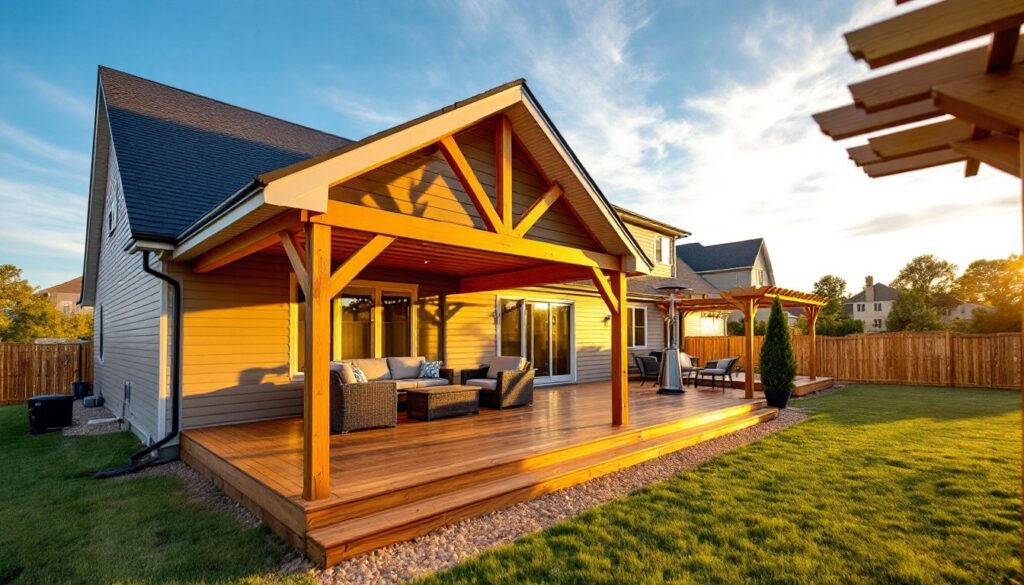
A gable roof pitches up from two sides to a central ridge, just like a traditional house roof. It’s the gold standard for full weather protection and pairs cleanly with most home architecture.
Structure: You’ll need ridge beam, rafters (typically 2×6 or 2×8 on 16″ or 24″ centers), posts (4×4 or 6×6 treated lumber or engineered columns), and footings below the frost line. Rafters tie into a ledger board bolted to the house rim joist, assuming the wall can carry the load, verify with an engineer if you’re spanning more than 12 feet or in heavy snow country.
Pitch: A 4:12 to 6:12 slope sheds water well and leaves room for insulation or a ceiling fan later. Steeper pitches handle snow better but add height, watch local zoning for maximum structure height.
Roofing: Asphalt shingles match most homes and run about $90–$150 per square (100 sq ft) installed. Metal panels (standing seam or corrugated) cost more upfront, $250–$400 per square, but last 40+ years and handle ice dams better.
Trade-off: Gable roofs deliver the most overhead clearance and ventilation. They’re also the most complex to frame and typically require professional help unless you’re comfortable cutting birdsmouth notches and handling roof sheathing overhead.
Modern Flat and Shed Roof Options
Flat roofs (technically a 1:12 to 2:12 pitch) suit contemporary homes and save headroom. They’re simpler to frame than gables: install posts, run a ledger on the house, lay joists (usually 2×8 or 2×10 treated lumber on 16″ centers), add 1/2″ or 5/8″ CDX plywood sheathing, and top with a membrane.
Waterproofing: Skip roll roofing, it fails fast. Use EPDM rubber membrane, TPO, or modified bitumen with heat-welded seams. Expect $4–$7 per square foot material cost. Proper drainage is critical: slope toward scuppers or gutters to avoid pooling.
Shed roofs slope in one direction, often from the house wall outward. They’re the easiest DIY option: fewer angles, no ridge beam, and you can often use standard 2×6 rafters on a short span (under 10 feet).
Aesthetics: Shed roofs work with mid-century, modern farmhouse, and industrial looks. Pair them with metal roofing or horizontal siding on the fascia for a clean line.
Drawback: Low-slope roofs trap heat and don’t ventilate as well. If you’re in a hot climate, add a ceiling fan or leave the underside open with painted joists for airflow.
Pergola-Style Covers with Retractable Features
A pergola isn’t a true roof, it’s an open framework of beams and cross rafters that filters sunlight. Add a retractable canopy or shade sail, and you get adjustable coverage without a full permit (in most jurisdictions, check local rules).
Frame: Build with 4×4 or 6×6 posts, 2×8 or 2×10 beams, and 2×4 or 2×6 cross rafters spaced 12–24″ apart. Western red cedar, treated pine, or composite lumber all work. For a modern look, powder-coated aluminum kits are available but cost $15–$30 per linear foot of beam.
Retractable fabric: Sunbrella or solution-dyed acrylic canopies resist UV and mildew. Manual track systems run $300–$600 for a 10×12 pergola: motorized versions with wind sensors start around $1,200. Expect fabric to last 5–8 years before fading.
Louver systems: Adjustable aluminum louvers (brands like StruXure or Arcadia) rotate to block sun or rain and cost $50–$80 per square foot installed, beyond most DIY budgets, but worth noting for high-end builds.
Best use: Pergolas suit climates with mild, occasional rain. They won’t keep snow or heavy storms off the deck, but they knock 50–70% of direct sun and make July afternoons livable.
Material Choices: Metal, Wood, and Polycarbonate
Metal roofing panels (galvanized steel, aluminum, or Galvalume) install fast and last decades. Corrugated panels cost $2–$4 per square foot: standing seam runs $8–$12. They’re lightweight, no need to beef up framing, and shed snow like nothing else. Downside: noise during rain (less of an issue outdoors) and potential for rust if you skimp on coatings.
Wood shingles or shakes (cedar, redwood) offer a rustic look and natural insulation. Expect $6–$10 per square foot installed and a 20–30 year lifespan with proper maintenance. Fire rating varies, Class A treated shakes are required in wildfire zones.
Polycarbonate panels (clear, frosted, or tinted) let light through while blocking UV and rain. Multiwall (twin-wall or triple-wall) panels offer better insulation than single-layer. They cost $3–$6 per square foot and install onto purlins with special fasteners that allow thermal expansion. Polycarbonate yellows after 10–15 years in full sun, look for panels with UV coatings on both sides.
Asphalt shingles remain the budget default: $1.50–$3 per square foot. They’re easy to source, DIY-friendly, and blend with existing house roofs. For covered deck ideas that match traditional architecture, shingles are hard to beat.
Mixing materials: Pair metal roofing with wood beams, or run polycarbonate panels between dark-stained rafters for a hybrid look that balances light and shade.
Budget-Friendly DIY Deck Roof Projects
Single-slope lean-to: The easiest weekend project. Bolt a 2×8 ledger to the house wall (into studs or rim joist with 1/2″ lag screws and flashing), set two or four 4×4 posts in concrete footings 8–10 feet out, lay 2×6 rafters at 24″ on center, sheath with 1/2″ OSB or plywood, and top with metal panels or roll roofing. For a 10×12 deck, materials run $800–$1,200 if you skip the permit and do it yourself. (But don’t skip the permit, most localities require one.)
Pergola with corrugated panels: Frame a simple pergola (four posts, two beams, rafters on 16″ centers), then screw down corrugated PVC or polycarbonate panels. Total material cost for a 10×10 structure: $500–$900. It won’t pass as a full roof, but it blocks sun and light rain, and usually doesn’t trigger the same permit hoops as an enclosed structure.
Shade sail over existing posts: If your deck already has railing posts or corner posts, tension a triangular or square shade sail between them using turnbuckles and stainless hardware. High-quality sails cost $150–$400 and install in an afternoon. Not a roof, but a fast, removable option that works in rentals or HOA-restricted areas.
Tool notes: A circular saw and drill handle most framing. A miter saw makes rafter cuts cleaner. Rent a post-hole auger ($40–$60/day) if you’re digging footings by hand, worth every penny. For roofing, a pneumatic nailer speeds up shingle work, but hand-nailing is doable.
Safety: Wear gloves, safety glasses, and hearing protection when cutting. Use a fall harness if you’re working above 6 feet on a ladder. Polycarbonate and metal panels have sharp edges, handle with care.
Where to start: Browse Instructables for dozens of user-submitted deck roof plans with cut lists and photo walkthroughs. They’re unfiltered and real-world, sometimes that’s more useful than a glossy magazine spread.
Conclusion
Adding a roof to your deck isn’t just cosmetic, it’s a practical upgrade that keeps weather at bay and extends how you use the space. Whether you go with a classic gable, a minimalist shed roof, or a pergola with retractable shade, match the design to your skill level, budget, and local codes. Start with a solid plan, don’t skip the permit, and invest in the right materials for your climate. Done right, a covered deck becomes the room you use most, rain or shine.